
Commercial Refrigeration Repair
Cake Display Fridge Troubleshooting (Bakery and Cafe Owners)
Common faults in cake display chillers: glass condensation, uneven cooling, frost buildup, short-cycling. Quick checks before calling Chill Pro PJ.
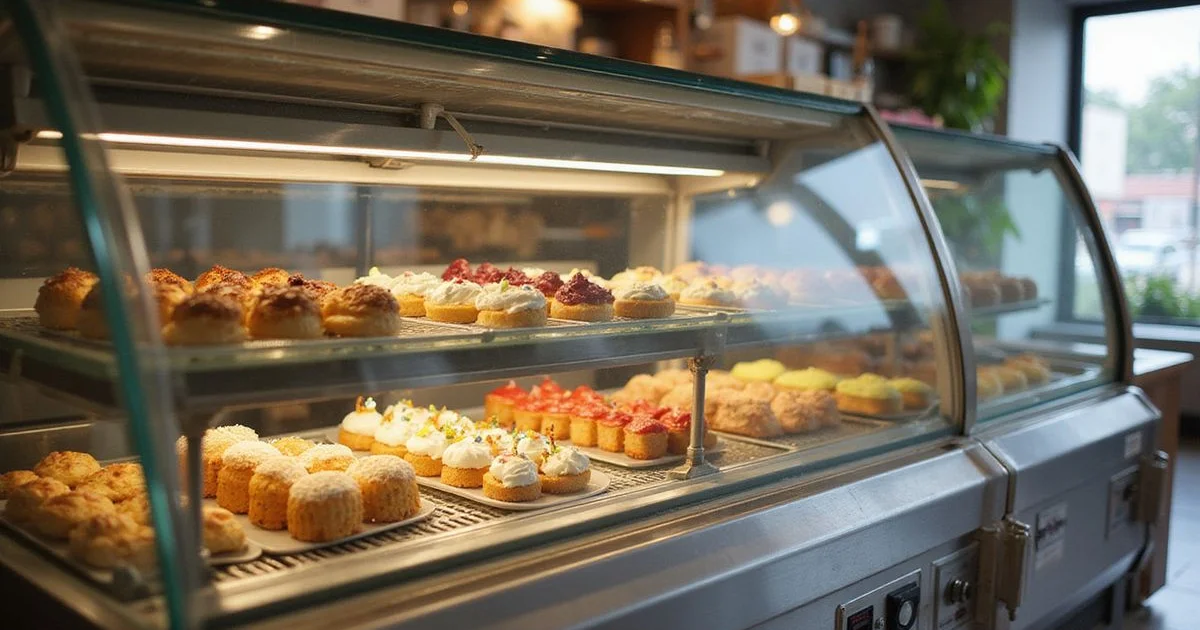
As cafe operators in Malaysia, we know the constant battle against our 80% average tropical humidity. It pushes commercial equipment to the absolute limit. A cake display fridge not cooling properly is an immediate threat to your weekend sales.
We see these demanding units fail often because of high cycling and frequent door openings. Customers spot a foggy glass front instantly, and they usually assume the food is compromised. Here are the faults our technicians see most often across Petaling Jaya cafes.
You will also find quick checks you can perform right now before booking a commercial refrigeration service. Let us look at the data and explore practical ways to respond.
The Five Most Common Cake Display Faults
1. Glass Condensation (“Sweating”)
Glass condensation happens when warm, humid cafe air hits the cold display surface. You usually see water beads forming on the inside or outside of the glass.
Our repair logs show this is the most visible fault to your customers. They see the sweating glass and immediately question food safety. You need to address a cake fridge condensation issue quickly to protect your visual merchandising.
Common causes:
- Failed door gasket: Warm air leaks in around the door edges.
- Broken heater wire: The anti-condensation warming element along the glass fails.
- High ambient humidity: ASHRAE standards suggest keeping indoor humidity below 60%. Many open-air cafes routinely exceed 75%, overwhelming the system.
Quick check: Run a RM10 note along the closed door gasket. You should feel slight resistance when pulling it out. Check the strip along the glass edges, which should feel slightly warm to the touch when the unit runs.
2. Uneven Cooling (Top vs Bottom)
Uneven cooling typically points to restricted airflow or a failing evaporator fan motor. You will notice items on the top shelf feeling warmer than those on the bottom, or vice versa.
The Malaysian Food Act guidelines require dairy-based cakes to stay below 4°C. An uneven temperature profile puts your delicate items at severe risk of spoilage.
Common causes:
- Failing fan motor: The system produces no airflow to circulate cold air.
- Displaced air baffle: Factory baffles direct cold air perfectly. Loading stock carelessly can dislodge them and break the distribution.
- Low refrigerant: The full cooling capacity fails to reach the entire cabinet.
Quick check: Put a thermometer on the top shelf and another on the bottom shelf for 30 minutes. A temperature difference greater than 3°C indicates an airflow problem. Listen closely for the internal fan, as it should produce a steady hum.
3. Frost Buildup on Evaporator
Frost buildup occurs when humid air constantly enters the cabinet and freezes on the cooling element. You will spot white ice spreading across the back wall.
Modern controllers from brands like Dixell or Carel usually manage automatic defrost cycles three to four times a day. The system fails to clear the ice if these electronic components malfunction.
Common causes:
- Door left open: A one-off mistake might clear with a manual defrost cycle.
- Failed defrost timer: A recurring issue requires replacement parts.
- Gasket leak: The system continuously lets in humid air to refreeze on the coils.
Quick check: Switch the unit off for 4 to 6 hours overnight after relocating your stock. The defrost system requires a technician if the frost returns within a week of restarting.
4. Compressor Short-Cycling
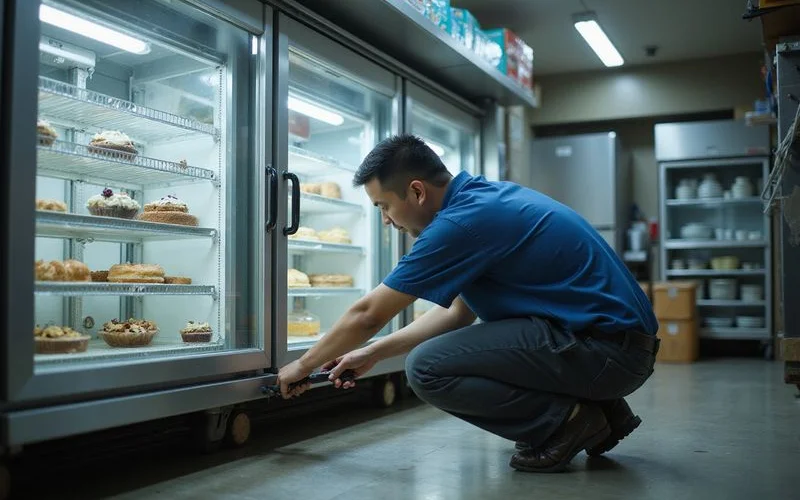
Short-cycling means your compressor runs for a very brief time before shutting off and restarting constantly. You will hear the unit click on and off every 1 to 3 minutes.
This rapid clicking destroys equipment fast. Commercial compressors from brands like Secop or Embraco draw up to six times their normal running current during startup.
Common causes:
- Failed thermostat: The temperature sensor falls out of position or breaks completely.
- Refrigerant issue: The system has a low charge or contaminated gas.
- Condenser fan failure: The compressor protection triggers to prevent overheating.
Quick check: Time the on and off cycles for 15 minutes. Normal operations require 8 to 15 minutes per cycle. Anything under 5 minutes qualifies as short-cycling.
Replacing a burned-out compressor often costs between RM1,500 and RM3,000 depending on the horsepower. Addressing this electrical fault early saves a massive replacement bill.
5. Water Accumulation in Cabinet Base
Standing water in the cabinet base usually indicates a blocked condensate drain line. You will see water pooling under the lowest shelf.
Humid Malaysian environments promote a pink bacterial slime called Serratia marcescens. This specific biofilm grows rapidly and clogs narrow drain tubes.
Common causes:
- Blocked drain: Debris or biofilm stops the water flow completely.
- Cracked evaporator pan: Warm vapor fails to evaporate from the damaged drip tray.
- Incorrect slope: Water pools inside the cabinet instead of draining away.
Quick check: Locate the drain channel at the back of the cabinet base. Clear any visible debris with a soft brush. The drain pipe needs professional attention if water continues to pool.
Why Cake Displays Fail More Than Walk-In Chillers
Cake displays fail faster because they endure a much higher cycle frequency than standard walk-in units. A busy local bakery might open a front-of-house unit 150 times a day. Walk-in chillers typically see fewer than 20 openings.
These smaller units rely on hard-working parts. Cake displays use smaller compressors and fans that work harder per unit of cooling capacity. The daily duty cycle is simply more demanding.
Temperature drift in a walk-in might not affect stock visibly right away. A struggling cake display creates immediate visual problems like softened mousse or sweating cheesecakes.
We strongly recommend quarterly maintenance contracts more aggressively for cafes with cake displays.
| Feature | Cake Display Fridge | Walk-In Chiller |
|---|---|---|
| Daily Door Openings | 100 to 200+ | 15 to 30 |
| Visibility Impact | Immediate (Fog, soft cakes) | Delayed |
| Compressor Duty Cycle | Extremely High | Moderate |
| Recommended Service | Quarterly | Bi-annually |
Product-Presentation Impact (Why Speed Matters)
When a fault appears during operating hours, the customer-facing damage compounds rapidly. Bacteria can multiply dangerously fast if internal temperatures rise.
A 2024 food safety report noted that spoilage bacteria double every 20 minutes when dairy temperatures exceed 5°C. Speed is critical to saving your expensive inventory.
- Hour 1: You face a slight presentation issue like light condensation or a slightly soft texture. Most customers do not notice the change.
- Hour 2 to 3: The problem becomes highly visible. Glass condensation prevents clear viewing, and delicate items lose form.
- Hour 4+: You face a direct sales impact. Customers walk past the display instead of ordering.
The 90-minute commercial response we offer aims to keep this damage within the first hour for most faults. Send a WhatsApp message to the duty line as soon as you notice any symptoms.
Booking Service
You can get immediate technical support by contacting our local dispatch team. A fast cafe display fridge troubleshoot session prevents minor faults from becoming major stock losses.
WhatsApp +60 14-850 9211 with the following details:
- Unit Type: Specify the brand and model, such as “True G3, 2-door cake display.”
- Symptom: Mention the exact issue, like condensation or short-cycling.
- Stock Value: Provide a rough estimate of the goods currently inside.
- Location: Send your specific cafe address.
We maintain a typical 90-minute response time across SS2, Damansara Uptown, and Ara Damansara. You receive standard Petaling Jaya pricing with zero remote-area surcharges. Our technicians handle patisserie display chiller repair work in these neighbourhoods daily.
Many clients prefer scheduled prevention over reactive emergency repairs. Our F&B maintenance contracts cover your cake displays, walk-ins, and beverage showcases on customised schedules. Reach out today to secure your cooling equipment.
Cake Display Fridge Troubleshooting (Bakery and Cafe Owners) — FAQs
Why is my cake display fridge sweating on the glass?
What temperature should a cake display hold?
Do you service cake displays at SS2 cafes?
Related Guides
Why Is My Commercial Freezer Tripping the Power?
Freezer keeps tripping the breaker? Common electrical faults: compressor short, starter relay, fan motor, defrost element, moisture intrusion.
Commercial Refrigerator Repair vs Replacement: Cost-of-Downtime Analysis
Should you repair or replace your commercial chiller? Age rules, energy-efficiency math, true cost of downtime for F&B operators.
Preventive Maintenance Contracts for Restaurant Refrigeration
What a real B2B refrigeration maintenance contract covers: monthly vs quarterly, HACCP documentation, cost-of-prevention math for F&B owners.
Walk-In Chiller Not Cooling: Diagnosis Guide for F&B Operators
Restaurant chiller not cooling? Triage steps to save your stock plus the four most common causes — refrigerant leak, compressor, condenser, defrost.
Ready to talk to a technician?
Need help with commercial refrigeration repair?
We are based in Taipan Damansara 2 — same-hour callout in Ara Damansara, same-day across PJ. Honest pricing, no upselling.